Buying more vans to solve a compliance problem could be the most expensive mistake a fleet manager makes in 2026. The market looks like it is recovering. Look one layer down and the picture gets uncomfortable.
The market looks healthy on paper
The SMMT's May figures put 23,620 new vans, pickups and 4x4s on UK roads, up 3.6% on the same month last year. It was the second straight month of growth, the first back to back rise since 2024. On the surface, a market finding its feet again.
Then you look one layer down
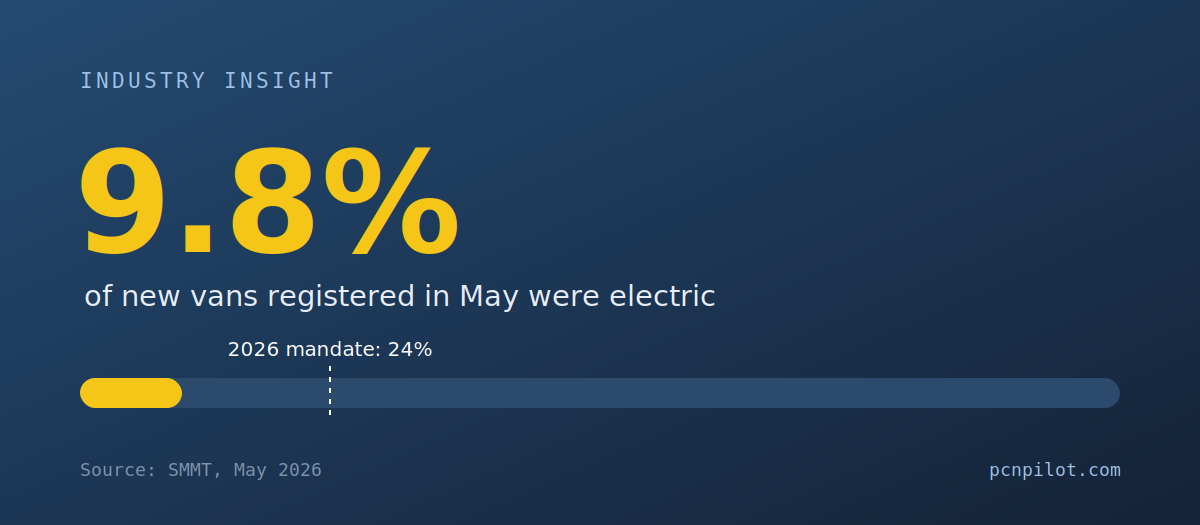
Electric vans took just 9.8% of that market in May. Better than the 7.6% of a year ago, but down from April's 11.1%, and a long way short of the 24% the Zero Emission Vehicle mandate demands for 2026. Across the first five months of the year, electric sits at 9.5%, below even the target that was set for 2024.
Put plainly: after years of targets, infrastructure promises and manufacturer pledges, nearly nine in ten new vans registered in May were still not electric. The transition is moving slower than the timetable assumes.
The bind most fleet managers are in
Faced with that, the standard move is to lock into a long term purchase or lease to stay compliant and keep costs predictable. Logical on the surface. The friction nobody talks about sits underneath it.
You are either committing serious capital to EV technology that is still maturing, with prices, residual values and charging all in motion, or you are running ageing diesel vans straight into a wall of rising compliance costs and emissions penalties. Neither option is clean cut.
Owning your fleet used to mean controlling your costs
That was the old assumption. Own the fleet, control the cost. Right now, owning the fleet can mean owning the risk. A five year commitment signed today is a bet on which way the transition breaks. Get the bet wrong and you are left carrying depreciating EV assets, or stranded diesel that costs more to run every year.
Fleet managers are stuck between two expensive certainties, not one easy choice.
What flexibility looks like for the next 18 months
This is not a vote for diesel or for electric. It is a case for not handcuffing yourself to a five year bet while the rules and the technology are still moving. In practice that means a few things:
- Shorter commitment horizons, so you are not married to one technology for half a decade.
- Matching vehicles to actual contracts rather than buying for your busiest week of the year.
- Keeping a flexible slice of the fleet you can scale up or down as demand and rules change.
- Hiring in for demand spikes and uncertain routes instead of owning every vehicle outright.
- Staggering renewals so a single bad year does not expose the whole fleet at once.
The aim is simple. Stay compliant, keep moving, and avoid tying yourself to a decision the market itself has not settled.
The cost you can control today
The big fleet question will stay uncertain for a while. The day to day admin does not have to. Enforcement notices keep landing whatever you drive: parking charges, acceptance notices, speeding tickets. Reading them, matching them to the driver, and recharging or nominating is a cost you can take off the desk right now, while the larger strategy plays out.
So here is the question worth sitting with this week: if the transition is slower than the targets demand, what does a genuinely flexible fleet strategy look like for your next 18 months?